
In This Article
A metal frame mechanical sewing machine for beginners is a dial-operated sewing machine built on a rigid metal internal chassis instead of molded plastic, with no computer controlling the stitches. The metal keeps the needle bar and feed dogs aligned, which means steadier seams, less shaking, and a machine that survives the learning curve.
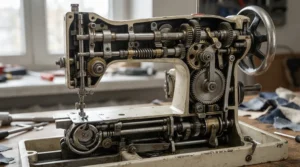
Your first sewing machine has exactly one job: not to be the reason you quit. Nothing sours a new hobby faster than a featherweight plastic shell that hops across the table, skips stitches on a denim hem, and rattles like a coin dryer. That’s why a metal frame mechanical sewing machine for beginners stays the quiet favorite of sewing teachers, repair techs, and anyone who has fought a wobbling budget machine at 11 p.m. before a deadline.
The core idea hasn’t changed much since the sewing machine became a household tool. Needle goes down, hook grabs the thread, feed dogs nudge the fabric along. A heavy frame simply keeps that choreography in step.
This guide is built on research, not a workshop audition. As of November 2026, I compared manufacturer specs, retailer listings, and the aggregated sentiment in published owner and expert reviews across seven machines, from budget to premium. I’ll flag one thing spec sheets love to blur: “metal frame” can mean anything from a full die-cast aluminum skeleton to a metal bracket hiding inside a plastic body. We’ll separate real from marketing as we go.
Prices below are ranges, never exact figures, because they shift constantly. Always check current pricing before you buy.
Quick Comparison: 7 Metal Frame Machines Side by Side
Here’s the whole field on one screen, so you can see the trade-offs before the deep dive.
| Machine | Stitches | Frame and Build Notes | Price Range | Best For |
|---|---|---|---|---|
| Singer Heavy Duty 4423 | 23 | Metal frame, stainless steel bedplate | $200-$250 | Denim, canvas, speed |
| Janome 2212 | 12 | All-metal inner casting (dealer listings) | $190-$270 | Learning fundamentals |
| Singer Heavy Duty 4411 | 11 | Metal frame | Check current price; typically below the Singer Heavy Duty 4423 | Hemming and mending on a tight budget |
| Singer Heavy Duty 4432 | 32 | Heavy-duty metal frame (manufacturer claim) | Under $300 | Beginners wanting more stitch choice |
| Janome HD1000 Black Edition | 14 | Die-cast aluminum frame and body | $300-$550 | Long-term durability |
| Janome HD3000 | 18 | Heavy-duty aluminum internal frame | $500-$600 | Sewists planning to keep one machine for years |
| Bernette B35 | 23 | Metal-bodied per some retailers; verify | $400-$500 | Dial lovers wanting Swiss-designed polish |
Read the table as a spectrum. The Singer Heavy Duty 4423 and the Janome 2212 deliver the most capability per dollar, while the Janome HD3000 charges a premium for aluminum internals and a top-loading bobbin. Budget buyers should note that the Singer Heavy Duty 4411 trades stitch variety for a lower entry price, whereas the Bernette B35 is the one entry where you must verify the build before paying for the name.
💬 Just one click — help others make better buying decisions too!😊
Top 7 Metal Frame Mechanical Sewing Machines for Beginners: Expert Analysis
Each pick below gets honest analysis grounded in specs and aggregated review sentiment, not invented testing. Where reliable review data is thin, I say so.
1. Singer Heavy Duty 4423 — most power per dollar
The Singer Heavy Duty 4423 earns its spot by being unapologetically strong. The motor is rated up to 1,100 stitches per minute, and Singer’s listings claim 50-60% more piercing power than its standard machines. The figure varies by listing, so treat it as marketing shorthand.
Translated into real life: 23 stitches with a 6 mm maximum width and 4 mm maximum length cover the everyday toolkit. A stainless steel bedplate and roughly 14.6 pounds of mass keep the machine planted at speed. An automatic needle threader and one-step buttonhole remove two classic beginner chores.
Based on the spec comparison, this suits someone who already knows jeans hems, tote bags, and canvas are on the menu. One caution: at least one expert roundup notes the frame is solid but the internals aren’t fully metal. “Heavy duty” here means strong for the price, not indestructible.
Reviewers consistently praise how it handles denim and canvas. Common complaints include a touchy pedal at low speeds, some units arriving with loose factory bobbin tension, and a flimsy plastic bobbin door. It also takes class 15 bobbins, so don’t substitute.
Pros:
- ✅ Pierces denim and canvas with confidence
- ✅ Automatic needle threader saves frustration
- ✅ Steel bedplate and metal frame add stability
Cons:
- ❌ Pedal can feel twitchy at slow speeds
- ❌ Louder than gentler machines
Expect roughly $200-$250 at the time of research; check current price. For raw capability per dollar, it’s the one to beat.
2. Janome 2212 — simplest dial controls, longest warranty
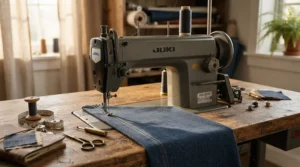
Janome built the Janome 2212 around one philosophy: fewer things to break, fewer things to confuse you. Twelve stitches, a four-step buttonhole, and a front-loading vertical oscillating hook bobbin are the whole show.
What do those specs mean at the table? Twelve stitches sounds stingy until you notice that straight, zigzag, stretch, blind hem, and overlock-style stitches are what beginners reach for most. The dealer-listed all-metal inner casting puts it around 14-15 pounds, heavy enough to stay put. Its listed ceiling of roughly 860 stitches per minute is arguably a feature, since a lower top speed is easier to control.
Here’s what to weigh: this is the machine for someone who wants to learn tension, thread paths, and bobbin handling properly. The missing automatic needle threader and lack of presser foot pressure adjustment are real trade-offs, and heavy denim layers push it toward its limits.
Owners generally describe it as solid, easy to thread, and great for basics. One recurring warning concerns warranty. Janome advertises 25 years on mechanical parts, but buyers report that machines from some third-party sellers don’t carry it. Confirm the seller is authorized before you click.
Pros:
- ✅ Sturdy metal inner casting stays put
- ✅ Simple dials teach real sewing skills
- ✅ Long mechanical-parts warranty from authorized dealers
Cons:
- ❌ No automatic needle threader
- ❌ Struggles with many layers of heavy denim
Street prices run around $190-$270, with MSRP in the high-$200s; check current price. Verdict: the best pure-learning value here.
3. Singer Heavy Duty 4411 — cheapest way into the 1,100-stitch club
The Singer Heavy Duty 4411 is the stripped-down sibling: 11 built-in stitches, a four-step buttonhole, a metal frame, and the same 1,100 stitches-per-minute headline speed. Singer’s marketing leans on “69 stitch applications,” which is multiplication of settings, not 69 separate stitches.
Plainly put, 11 stitches covers straight, zigzag, stretch, and blind hem. That’s enough for hemming, mending, curtains, and basic bags. Because the Singer Heavy Duty 4411 is a manual-feeling, dial-driven machine, you’ll learn each adjustment by hand instead of tapping a screen.
On paper, it suits the beginner who sews for repairs rather than creativity and wants metal-frame stability at the lowest sensible spend. It’s less suited to anyone who suspects they’ll crave decorative stitches within six months.
Review sentiment is patchier than for its siblings. One shopper described choosing it despite a “less than stellar” average, mainly for manual control, and bobbin trouble tied to using the wrong bobbin type shows up across this Singer family. I couldn’t verify a deep, consistent review pool, so treat this as a calculated budget bet.
Pros:
- ✅ Heavy-duty motor at an entry-level tier
- ✅ Metal frame for stable stitching
- ✅ Four-step buttonhole teaches the mechanics
Cons:
- ❌ Only 11 stitches limits creativity
- ❌ Review track record is less consistent
Check current price; it typically sits near or below its bigger siblings, so expect under $250. Verdict: a solid pick if repairs, not artistry, are the goal.
4. Singer Heavy Duty 4432 — 32 stitches with a jam-resistant bobbin
The Singer Heavy Duty 4432 pitches itself at beginners who want room to grow: 32 stitches, 1,100 stitches per minute, and a bobbin Singer markets as jam-proof.
Spec-sheet meaning: more stitch choice means decorative and stretch options without upgrading later. A jam-resistant bobbin design is aimed at the dreaded “bird’s nest” of tangled thread under the fabric, a top reason beginners abandon machines.
My honest caveat: I couldn’t verify a large, independent review base for this model, so its feature claims here are manufacturer-listed. The same “heavy-duty metal frame” language applies as with its siblings, and the 4423’s internal-construction caveat is a fair reason to weigh the machine before buying. If the box feels suspiciously light, that tells you something.
The Singer Heavy Duty 4432 makes the most sense for someone who likes the Singer Heavy Duty 4423‘s power but wants more stitch variety and a gentler bobbin experience. Reviewers across this Singer family do praise speed and thick-fabric ability while criticizing noise and pedal sensitivity.
Pros:
- ✅ 32 stitches leave room to grow
- ✅ Jam-resistant bobbin design for beginners
- ✅ High-speed motor handles thick fabrics
Cons:
- ❌ Thin independent review data
- ❌ Metal claims deserve a weight check
Expect under $300; check current price. Verdict: promising, but verify before committing.
5. Janome HD1000 Black Edition — aluminum frame and body
The Janome HD1000 Black Edition takes durability seriously. Janome describes the “HD” label as earned from a powerful motor and an all-aluminum interior frame and outer body, and the machine carries a heavy-duty reputation despite a modest stitch count.
Specs, decoded: 14 stitches, a four-step buttonhole, an automatic needle threader, 7-piece feed dogs, and a maximum width around 5 mm. Roughly 15 pounds of die-cast aluminum means calm, composed sewing at speed. Seven feed-dog segments grip slippery or layered fabrics better than the basic three-piece versions.
A key caution: one Janome dealer lists the Black Edition as discontinued while the original white HD1000 remains available. Availability and bundles vary, so verify which version you’re actually buying.
Review data here is small and scattered, with only a handful of ratings on some retailer listings, so I can’t offer a reliable aggregate. Published descriptions position it as dependable for denim and everyday home sewing, sometimes billed as “ideal for experienced sewists,” though its simplicity suits beginners too.
Pros:
- ✅ Aluminum frame and body feel truly solid
- ✅ Automatic needle threader included
- ✅ Seven-piece feed dogs grip layers well
Cons:
- ❌ Only 14 stitches for the price
- ❌ Black Edition availability is inconsistent
Prices swing widely, roughly $300-$550 depending on version and seller; check current price. Verdict: a long-haul buy for people who hate replacing things.
6. Janome HD3000 — top-loading jam-proof bobbin plus needle threader
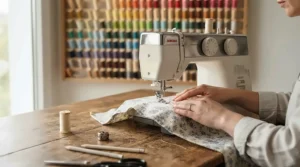
The Janome HD3000 is the premium rung of this ladder. Dealers describe a full heavy-duty internal aluminum frame, 18 stitches including a buttonhole, a removable free arm, a built-in needle threader, and a top-loading, jam-proof bobbin.
What that means in practice: a top-loading bobbin lets you see your thread supply and fix problems without tilting the machine. The removable free arm makes cuffs and sleeves far easier than flat-bed-only machines. Quilting feet and a hard cover are typically included, adding value.
On balance, this is the machine for the beginner who already senses they’ll still be sewing in five years. Expert roundups have called it a “mechanical workhorse,” though with the caveat that buttonholes remain a manual affair and there are no computerized conveniences.
Reviewers who rate it highly mention dependability and heavy-duty construction; the main criticism is simply price relative to cheaper options that sew similar projects.
Pros:
- ✅ Aluminum internal frame for durability
- ✅ Top-loading jam-proof bobbin
- ✅ Removable free arm, needle threader included
Cons:
- ❌ Costs far more than starter machines
- ❌ Manual buttonhole process
Dealers typically sit in the $500-$600 range; check current price. Verdict: worth it only if you’re serious about long-term ownership.
7. Bernette B35 — Swiss-designed, three-dial control
The Bernette B35 is Bernina’s budget-friendly line, and its appeal is clean simplicity: three dials set stitch pattern, length, and width, and 23 stitches (14 utility, 8 decorative, one automatic buttonhole) cover the basics.
What stands out: seven snap-on presser feet, a one-step buttonhole, and roughly 170 mm (about 6.7 inches) of space right of the needle make quilts and larger projects less cramped. Listings put weight at 13-16 pounds depending on source, and top speed varies from roughly 700 to 860 stitches per minute, which tells you to double-check specs with the seller.
The honest question is the frame. Some retailers call it metal-bodied, while at least one owner review says it feels more plastic than metal. Because the phrase “metal frame” isn’t consistently confirmed, ask the seller directly before treating this as a guaranteed metal chassis.
Review sentiment is encouraging: one retailer listing shows about 4.3 out of 5 across several hundred ratings. Owners like consistent plain stitches and quieter-than-expected operation, while a few report quality-control misses. Warranty terms differ by dealer, from 5 to 10 years on mechanical parts.
Pros:
- ✅ Bernina quality control behind the badge
- ✅ Seven feet and one-step buttonhole
- ✅ Quieter than many mechanical rivals
Cons:
- ❌ Metal frame claim isn’t consistent
- ❌ Priced above stronger-motor Singers
Expect roughly $400-$500; check current price. Verdict: great for dial lovers, but verify the build.
✨ Don’t Miss These Exclusive Deals!
🔍 Take your sewing journey to the next level with these carefully selected machines. Click on any highlighted item to check current pricing and availability. These tools will help you create authentic, durable projects your family will love!
How to Choose a Metal Frame Mechanical Sewing Machine for Beginners
Choosing well comes down to seven questions, answered in order.
- Verify the frame, not the slogan. Look for “interior metal frame” wording and a weight near or above 13 pounds. A full-size machine under roughly 10 pounds deserves suspicion.
- Match power to your fabric diet. If denim, canvas, and bags are the plan, favor higher piercing power. For quilting cotton and garments, a gentler motor is easier to steer.
- Pick a bobbin style you can live with. Front-loading designs reward longevity, while drop-in or top-loading bobbins are easier to see and fix.
- Count conveniences you’ll use. An automatic needle threader, free arm, and drop feed matter more than 200 decorative stitches.
- Check warranty and seller. Authorized dealers tend to honor long mechanical warranties; some third-party listings don’t.
- Budget for extras. Needles, extra feet, and a hard cover can add a meaningful amount.
- Do the dial test. If you can try one in a shop, turn every dial. Crisp clicks and smooth resistance signal good build quality.
All Metal Frame Sewing Machine Durable? What That Claim Really Means
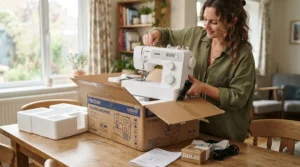
“All metal frame sewing machine durable” is a tempting search phrase, and a slightly misleading shopping goal. The frame is only the skeleton. Longevity depends equally on gears, the hook assembly, the bobbin case, and the motor.
True all-metal construction is rare at beginner prices because it adds weight and cost. One industry guide estimates full metal construction raises manufacturing cost by roughly 40-60% compared with plastic-gear alternatives. That’s why most affordable options pair a metal chassis with plastic housing and the odd plastic part, like the bobbin door on the Singer Heavy Duty 4423.
The practical takeaway: a metal frame buys stability and a longer expected lifespan, but it doesn’t make a machine immortal. Industry durability guides repeatedly point to plastic gear failure as a common reason machines die early, while metal gear assemblies tend to wear gradually and are often repairable.
So when you see an all metal frame sewing machine durable claim, read it as “more durable than plastic-framed rivals,” not “lifetime guarantee.” The Janome HD1000 Black Edition and Janome HD3000 come closest to the full-aluminum ideal. The Janome 2212 reaches durability through a metal inner casting and mechanical simplicity.
Mechanical Sewing Machine With Metal Chassis: How to Spot the Real Thing
A mechanical sewing machine with metal chassis should feel like a small appliance, not a toy. Here’s how to tell marketing from metal.
Read the exact wording. “Heavy-duty metal interior frame” is a good sign. If a listing only says “metal” for the needle bar or presser foot, assume the chassis is plastic.
Check the weight. Real metal chassis machines usually weigh 13-15 pounds or more. The Janome 2212 and Singer Heavy Duty 4423 land around 14-15 pounds, a useful benchmark.
Do the tap-and-lift test. Rap a knuckle on the body. A hollow, high-pitched sound suggests plastic, while a dull, solid thud suggests cast metal underneath.
Watch the warranty. Mechanical-parts coverage of 25 years, like the one Janome advertises on the Janome 2212, signals the maker’s confidence in internal components.
Ask directly. If a seller can’t confirm frame material in writing, treat that as your answer, especially for the Bernette B35, where listings disagree. A real mechanical sewing machine with metal chassis proves itself in specs, weight, and warranty.
Dial Stitch Selector: Why Knobs Teach Faster Than Menus
The dial stitch selector is the mechanical machine’s superpower. Turn it, see the stitch change, feel the click. There’s no LCD to reboot and no menu to get lost in.
For beginners, that tactile loop builds understanding quickly. On the Bernette B35, three dials set pattern, length, and width independently, so you learn how each variable changes a seam. The Janome 2212 pairs its dial stitch selector with adjustable stitch length for the same reason, and its simplicity is the point.
Singer’s heavy-duty line adds a clever wrinkle: on the Singer Heavy Duty 4423, selecting “S1” on the stitch length dial unlocks an extra set of stitches. It’s a small quirk, but one worth practicing before a project, not during one.
A good dial stitch selector should feel positive, without mushy gaps between settings. If you can test one in person, rotate through every setting. Loose dials often foreshadow wear. Tactile beginners tend to love dials; if you prefer seeing selections on a screen, a computerized alternative may suit you better.
Vibration Reduction: How a Heavy Frame Calms a Fast Needle
At 800-1,100 stitches per minute, a needle bar is a tiny jackhammer. Without enough mass and rigidity underneath, that energy goes into shaking the machine, the table, and your stitch line.
Vibration reduction is the quiet superpower of a metal chassis. Heavier, stiffer frames absorb motor and needle-bar forces instead of flexing, which keeps the needle aligned and the feed dogs consistent. Plastic frames, by contrast, tend to vibrate more, skip stitches on thick fabric, and wear out faster.
You can feel this in the numbers. At about 14.6 pounds, the Singer Heavy Duty 4423 stays planted at its 1,100-stitch ceiling, and its heavy frame is exactly what makes that speed usable. The Janome HD1000 Black Edition gets similar calm from die-cast aluminum.
Weight isn’t a perfect proxy, and good vibration reduction also depends on your setup. A sturdy table helps, as does a non-slip mat under the machine and a moderate speed while you’re learning. Treat the frame as the foundation and your sewing space as the second half of the solution.
Gear Driven Mechanism: What’s Actually Inside
Inside most home machines, a motor drives a main shaft, which moves the needle bar, the hook, and the feed dogs. A gear driven mechanism uses gears to link those motions, while others use belts and pulleys. Spec sheets rarely say which, so ask the dealer or check the manual.
Why care? Timing. A lockstitch only forms when the needle and hook meet at exactly the right instant, every stitch, thousands of times per minute. Anything that lets that timing drift, whether a stretched belt, a worn gear tooth, or a flexing frame, causes skipped stitches.
Gear material matters too. Metal gear sets tend to wear gradually, while plastic or nylon gears can fail abruptly by shearing teeth. Some manufacturers use nylon deliberately as a sacrificial part, so don’t assume plastic is automatically bad. But a metal gear driven mechanism paired with a metal frame is the combination built for longevity.
Maintenance is simple: keep lint out, follow the manual’s oiling instructions, and never force the handwheel. Strange clicking or grinding is your cue to stop and inspect.
Mechanical vs Computerized: Which Is Better for Beginners?
Since Elias Howe’s 1846 patent, the underlying mechanics have barely changed. Computerized machines add screens, motors, and automation on top of the same lockstitch logic, and mechanical machines skip all that.
| Factor | Metal Frame Mechanical | Plastic-Framed Budget Machine | Computerized With Metal Frame |
|---|---|---|---|
| Learning curve | Dials teach cause and effect | Easy but may frustrate on thick seams | Menus add convenience and complexity |
| Vibration at speed | Low | Higher | Low |
| Repair simplicity | Straightforward | Often disposable | Electronics add failure points |
| Stitch variety | Modest | Modest to high | Very high |
| Typical price tier | $190-$600 | Lowest | Mid to high |
| Best for | Learners who want durability | Occasional light mending | Sewists who want automation |
The table points to a clear pattern: mechanical metal frame machines win on repairability and skill-building, while computerized models win on convenience and stitch count. For a first machine, the mechanical route generally teaches better habits. If you’re torn, remember that skills you learn on a mechanical machine transfer to any computerized one later.
Common Mistakes When Buying a Metal Frame Mechanical Sewing Machine for Beginners
Chasing stitch count. A machine with 200 stitches and a plastic frame will still struggle with a four-layer denim seam. Frame quality beats stitch variety.
Trusting “metal” in the title. Always check whether the metal is the chassis or just a few parts. Look for explicit frame wording.
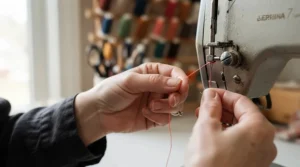
Ignoring bobbin type. Class 15 plastic bobbins in the Singer line behave differently from other types. Using the wrong bobbin is a widely reported source of “defective machine” complaints.
Buying from an unauthorized seller. Warranty coverage on a Janome 2212 from a random marketplace seller may not be honored.
Believing every review. Reviewers with affiliate relationships are expected to disclose them under the FTC’s endorsement guidance, so look for that disclosure and weigh sources accordingly.
Skipping the weight check. If a machine claims metal construction but feels feather-light, that’s your cue to ask harder questions.
Long-Term Cost and Maintenance: What Each Machine Really Costs
The sticker price is only chapter one. Consider needles, bobbins, oil, a dust cover, and eventual servicing.
| Machine | Price Range | Value Verdict | Hidden Costs |
|---|---|---|---|
| Singer Heavy Duty 4423 | $200-$250 | Best power per dollar | Extra bobbins, possible tension tweak |
| Janome 2212 | $190-$270 | Best learning value | Needle threader substitute, authorized-dealer premium |
| Singer Heavy Duty 4411 | Check current price | Budget entry | Upgrade later for more stitches |
| Singer Heavy Duty 4432 | Under $300 | Promising, verify first | Possible return shipping if build disappoints |
| Janome HD1000 Black Edition | $300-$550 | Long-haul durability | Version-availability risk |
| Janome HD3000 | $500-$600 | Premium workhorse | High upfront cost |
| Bernette B35 | $400-$500 | Good, but verify frame | Possibly warranty variance |
The numbers say something useful: a pricier machine isn’t automatically better value if you only hem pants. The Janome 2212 and Singer Heavy Duty 4423 cost the least per year of expected use for most beginners. If you plan to sew weekly for a decade, though, the Janome HD3000 spreads its higher cost thin over more years.
Your First 30 Days: Setup, Maintenance, and Mistakes to Avoid
Week one: set up properly. Place the machine on a sturdy table with a non-slip mat. Read the threading diagram, wind a bobbin, and sew straight lines on scrap cotton. Only after that, try zigzag.
Week two: learn tension. Mechanical machines let you adjust tension by dial, so test on scrap fabric. If the top thread pulls through to the back, loosen; if the bottom thread shows on top, tighten slightly.
Week three: practice your dial stitch selector. Sew a sample strip using each stitch you plan to use, labeled with settings. This becomes your personal cheat sheet.
Week four: start a maintenance habit. After every few hours of sewing, remove the needle plate and brush out lint. Follow the manual’s oiling instructions, if any, and change needles regularly.
Common first-month mistakes: pulling fabric instead of letting the feed dogs work, using the wrong needle size for the fabric, ignoring skipped stitches (a dull needle is usually the culprit), and mismatching bobbin types. Fixing these early protects the machine and builds good habits.
Real-World Scenarios: Which Machine Fits Which Beginner?
Scenario 1: The dorm-room hemmer. A college student sews on weekends: pant hems, a torn backpack strap, maybe a tote. Budget is tight, space is smaller than a desk. The Janome 2212 fits because it’s compact, simple to learn, and sturdy enough for occasional denim. The Singer Heavy Duty 4411 is a cheaper alternative if repairs are the whole job.
Scenario 2: The weekend bag maker. A parent sews canvas totes and dog accessories two or three evenings a week. Power and speed matter, and tolerance for noise is high. The Singer Heavy Duty 4423 is the logical match, with the Singer Heavy Duty 4432 as a step up if more stitch variety or a jam-resistant bobbin would help.
Scenario 3: The committed long-haul hobbyist. Someone starting a serious hobby, planning weekly sessions for years, with room for a $500+ investment. The Janome HD3000 or Janome HD1000 Black Edition pay off through durable aluminum frames and refined features. If they prefer dials and brand ecosystem, the Bernette B35 is worth a closer look after verifying its build.
Match your budget, environment, and frequency of use to the machine, and the right choice usually becomes obvious.
Problem → Solution Guide: 5 Beginner Headaches Fixed
1. Skipped stitches. Usually a dull or wrong-size needle. Replace it, match needle size to fabric, and check threading. On heavier machines like the Singer Heavy Duty 4423, use a denim needle for thick seams.
2. Thread nests under the fabric. Typically upper-thread tension or threading with the presser foot down. Re-thread with the foot up. A jam-resistant design like the Janome HD3000‘s top-loading bobbin helps.
3. The machine “walks” across the table. Add a non-slip mat and slow your speed. A heavier frame such as the Janome HD1000 Black Edition resists this by design.
4. Struggling with thick seams. Use a longer stitch length, a heavier needle, and sew slowly. Let the feed dogs do the pulling.
5. Confusing bobbin tension. Wind the bobbin evenly, use the correct bobbin type, and make small adjustments one at a time. On a Janome 2212, the front-loading bobbin case rewards patience.
FAQ
❓ How much should I spend on a metal frame mechanical sewing machine for beginners?
❓ Can a beginner sewing machine with a metal frame sew denim?
❓ Is a mechanical sewing machine easier to repair than a computerized one?
❓ Do I need an automatic needle threader on my first machine?
❓ Where should I buy to keep the manufacturer warranty valid?
Conclusion
A metal frame mechanical sewing machine for beginners is less about glamour and more about confidence. A stable frame, honest dials, and a motor that matches your fabric make learning fun instead of frustrating.
If you want the best all-around starting point, the Janome 2212 teaches fundamentals with a simple build and a strong warranty. For muscle on a budget, the Singer Heavy Duty 4423 is the standout, with the Singer Heavy Duty 4411 and Singer Heavy Duty 4432 as thrifty and feature-rich variations. For long-term investments, the Janome HD1000 Black Edition and Janome HD3000 bring aluminum construction that should outlast your first dozen projects, and the Bernette B35 rounds out the list for dial lovers who verify the build first.
Whichever you choose, check the frame wording, confirm the seller, and expect a short learning curve. Thread slowly, practice on scrap, and let a solid machine do what it was built for.
Recommended for You
- Computerized Sewing Machine with Automatic Needle Threader 7 Top 2026
- Computerized Sewing Machine for Quilting: 7 Best Picks (2026)
- Mechanical Sewing Machine for Denim Hemming: 7 Best Picks 2026
Disclaimer: This article contains affiliate links. As an Amazon Associate, I earn from qualifying purchases. If you purchase products through these links, we may earn a small commission at no additional cost to you.
✨ Found this helpful? Share it with your friends! 💬🤗
