
In This Article
Quilting is equal parts geometry and stubbornness. You cut hundreds of tiny pieces, stitch them back together, and then ask a machine to shove a bed-sized sandwich of fabric and batting through a gap the size of a lunchbox. A mechanical machine can do that. A computerized sewing machine for quilting does it with less fuss, fewer skipped stitches, and a lot less muttering.
The appeal is simple. Microprocessors handle tension, needle position, and stitch length for you, so your attention goes to the quilt. Add a roomy workspace and a few quilter-friendly accessories, and a good computerized sewing machine for quilting becomes the quiet hero of the sewing room. Quilting has a long history, and Wikipedia’s overview of quilting is a good reminder that the craft was thriving long before anyone plugged in a sewing machine. The tools have just gotten better.
This guide covers seven real machines, from budget to premium. It also covers the features that decide whether quilting feels easy or exhausting: an extension table, a wide throat, free motion quilting support, a stitch regulator, and a quarter inch piecing foot. Everything below rests on published specs and aggregated review sentiment, and prices are given as ranges only.
What Is a Computerized Sewing Machine for Quilting?
A computerized sewing machine for quilting is a microprocessor-controlled machine that automates stitch selection, tension, and needle positioning. It adds quilt-friendly hardware such as a wide workspace, an extension table, drop-feed capability, an automatic needle threader, and accurate quarter-inch seaming. In short, it trades manual dials for precise, repeatable stitching through many layers.
Quick Comparison: Computerized Sewing Machine for Quilting Picks at a Glance
| Machine | Built-In Stitches | Standout Quilting Feature | Price Range* | Best For |
|---|---|---|---|---|
| Brother XR9550 | 165 | Wide table, class-friendly size | $250-$350 | Beginners and class-goers |
| Brother HC1850 | 185 | Automatic drop feed for free motion work | $250-$400 | Budget buyers growing into quilting |
| Singer Quantum Stylist 9960 | 600 | Huge stitch library and extension table | $350-$450 | Sampler and decorative quilters |
| Juki HZL-F600 | 255 | Jam-resistant drop-in bobbin, metal build | $600-$850 | Serious piecers wanting a workhorse |
| Husqvarna Viking Opal 690Q | 208 | Automatic presser foot pressure sensing | $1,800-$2,200 | Mixed-fabric and mixed-layer quilting |
| Janome Horizon Memory Craft 8200QCP | 170 | 11-inch throat space | Premium (check current price) | Bed-size quilts at home |
| Janome Memory Craft 6700P | 200 | 10-inch all-metal flatbed, 1,200 spm | $2,600-$4,000 | Speed and long-haul durability |
*Prices change constantly. These are ranges observed at the time of research, so check current price before buying.
Looking at the table, the Brother XR9550 and Brother HC1850 deliver the lowest cost of entry, while the Singer Quantum Stylist 9960 stretches a small budget furthest on stitch variety. The real separation happens at the top: the Janome Horizon Memory Craft 8200QCP and Janome Memory Craft 6700P are built around workspace, which is what you feel on a queen-size quilt. If your quilts rarely exceed lap size, the budget tier covers you, and the premium tier is a luxury rather than a requirement.
💬 Just one click — help others make better buying decisions too!😊
Top 7 Computerized Sewing Machine for Quilting Picks: Expert Analysis
1. Brother XR9550 — best budget pick for classes
The standout here is portability paired with a quilter-ready table. It is a computerized machine light enough to tote to a Saturday workshop, yet it ships with a wide extension table, a feature that rivals often charge extra for.
The 165 built-in stitches look generous. In practice, most quilters will live on straight stitch, a handful of utility stitches, and a few decorative options for borders. The LCD makes stitch length and width quick to dial in, and the automatic needle threader saves your eyes during long sessions. On paper, that adds up to a machine that removes friction for newer quilters.
Based on the spec comparison, this is a beginner’s machine with room to grow. The trade-off is a smaller harp area than premium models, so wrangling a king-size quilt means more rolling and scrunching. Roundups commonly name it the pick for classes, and the listing carried a 4.6-star average at the time of research.
Pros:
- ✅ Light enough to carry to workshops
- ✅ Wide extension table included
- ✅ LCD and auto threader simplify setup
Cons:
- ❌ Tight workspace for bed-size quilts
- ❌ Plastic-heavy build versus metal-frame rivals
Expect an entry-level range of around $250-$350. For new quilters, the value verdict is strong.
2. Brother HC1850 — best value with automatic drop feed
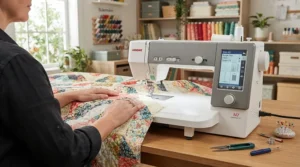
The hook is free motion readiness without a pricey upgrade. Reviewers and roundups, including Popular Science’s quilting machine guide, highlight its automatic drop feed, which matters because free motion quilting requires the feed dogs out of the way so you, not the machine, steer the fabric.
The 185 stitches, wide table, and automatic needle threader round out a sensible package. What that means in practice: you can piece a top on Monday and meander-quilt it on Saturday without buying a second machine. Eight buttonholes are more than any quilter needs, but they make the machine useful for bags and garments too.
The analytical takeaway is that this is the pivot point on the price curve. Spend less and you give up features quilters genuinely use. Spend more and you mostly buy workspace, speed, and refinement. One caveat from the spec sheet: stitch regulation is not part of the published feature list, so your free motion stitch length still depends on your hands and foot.
Pros:
- ✅ Automatic drop feed for free motion work
- ✅ Wide table supports larger quilt tops
- ✅ Strong feature count for the money
Cons:
- ❌ No built-in stitch regulation
- ❌ Smaller workspace than premium machines
At roughly $250-$400, it offers excellent value. Check current price, since it moves around.
3. Singer Quantum Stylist 9960 — biggest stitch library for sampler quilters
Six hundred built-in stitches is the headline, and it separates this machine from nearly everything else at this price. Add 13 one-step buttonholes, 13 presser feet, and a large extension table, and you have a machine that doubles as a decorative-stitch playground.
Here is the honest interpretation: most quilters will never touch 600 stitches. The real value is the accessory bundle and the extension table, which help you handle larger quilts. If you enjoy decorative stitching on crazy quilts or sampler projects, the stitch library earns its keep. One roundup flags that you should check throat space before committing to large quilts, which is good advice for any machine in this tier.
Review sentiment is notably deep. One roundup reports around 9,000 reviews averaging 4.4 stars, and the machine is described as a favorite of quilters who also sew garments and home decor. Complaints in user reviews tend to center on workspace limits rather than stitch quality.
Pros:
- ✅ Enormous stitch variety for decorative work
- ✅ Large extension table included
- ✅ Generous accessory bundle
Cons:
- ❌ Throat space limits bed-size quilts
- ❌ Stitch count exceeds most quilters’ needs
Look for a range of about $350-$450. Value verdict: excellent for variety seekers.
4. Juki HZL-F600 — steady metal workhorse for serious piecers
Metal construction is the story. At around 30 pounds, this machine stays planted when you push through bulky seams, which is exactly what you want when a block has eight seams converging in one spot.
Specs worth translating: 255 stitches, an LCD display, an automatic needle threader, and a jam-resistant drop-in bobbin. The bobbin system is the quiet hero, because fewer thread jams mean fewer ruined stretches of quilting. Weight cuts both ways, though. This is a machine you leave on its table, not one you carry to a retreat.
Reviewers, including users on quilting forums cited in roundups, consistently describe it as capable at both piecing and free motion quilting. One reviewer reported no fabric shifting even on a queen-size project. That is an individual report, not a lab result. The main complaints are the higher price compared with Brother and Singer options and an accessory bundle that is less generous than the Singer’s.
Pros:
- ✅ Sturdy metal build resists vibration
- ✅ Jam-resistant drop-in bobbin
- ✅ Handles piecing and free motion well
Cons:
- ❌ Heavy for travel or classes
- ❌ Pricier, with fewer bundled extras
Plan on roughly $600-$850. If you sew every week, the value verdict is positive.
5. Husqvarna Viking Opal 690Q — presser foot pressure that thinks for itself
The standout is the Exclusive Sensor System, which senses and adjusts presser foot pressure as you sew. That matters in quilting because you constantly change fabric thickness: a flat block, then a bulky seam intersection, then the binding.
The machine lists 208 stitches, four fonts, automatic thread tension, a thread cutter, a bobbin thread sensor, five speed settings, and a start/stop function. Practically, the thread cutter and start/stop save thousands of tiny hand movements across a quilt. Dealers describe roughly 8 inches of sewing space, so it is generous but not as wide as the Janome premium pair below. Quilting bundles with an extension table with adjustable guide and a quilting kit show up regularly, which adds real value.
Independent aggregated review data was thin in the sources reviewed, so there is no review score to quote here. What is verifiable is a dealer FAQ calling it a quilter’s favorite because of the sensor system, the workspace, and the thread cutter, which is marketing, not a verdict. Treat it as promising on paper.
Pros:
- ✅ Automatic pressure sensing across layers
- ✅ Thread cutter and start/stop convenience
- ✅ Quilting bundles add an extension table
Cons:
- ❌ Significantly pricier than mid-tier machines
- ❌ Workspace narrower than 10-inch rivals
Retail typically lands around $1,800-$2,200. Value verdict: fair if you want automation and will use the bundle.
6. Janome Horizon Memory Craft 8200QCP — widest throat in this lineup
The hook is space: roughly 11 inches of throat, which makes it the roomiest machine here for bed-size quilts. This is where a computerized quilting machine with wide throat design pays off.
Roundups list 170 stitches, automatic thread tension, and an LCD touchscreen. The wide throat means less rolling and bunching of the quilt, so you fight gravity less and stitch more. Janome’s AcuFeed Flex dual-feed system is part of this product family, but confirm it is in your specific bundle before you buy, because configurations vary.
On the review front, deep aggregated data was not available in the sources reviewed, so rely on spec comparison and a dealer demo. Based on that comparison, this machine suits quilters who regularly finish queen-size tops at home and want long-term room to grow. If your quilts stay small, you are paying for space you will not use.
Pros:
- ✅ Roughly 11-inch throat for large quilts
- ✅ Automatic thread tension simplifies setup
- ✅ Touchscreen speeds stitch selection
Cons:
- ❌ Premium price, check current price
- ❌ Stitch regulator status varies by bundle
Expect a premium-tier price. Verdict: worth it only if workspace is your priority.
7. Janome Memory Craft 6700P — professional-grade flatbed for speed and durability
This one is the heavyweight. A 10-inch all-metal seamless flatbed, 1,200 stitches per minute, and an included large extension table make it the closest thing to an industrial feel in a home machine.
Key specs: 200 built-in stitches, one-push needle plate conversion with three included plates, a detachable AcuFeed Flex layered fabric feeding system, six LEDs in three locations, and 17 included feet. Among them is a quarter-inch seam foot, which ties directly to accurate piecing. At around 24 pounds, it is built to live in one place. The practical meaning: seams stay straight at high speed because the machine stays put and feeds layers evenly.
Retailers market it to experienced sewists and quilters. Independent review aggregation was limited in the sources reviewed, so treat it as a spec-driven recommendation. It suits quilters who stitch daily, often at speed, and plan to keep one machine for a decade.
Pros:
- ✅ 10-inch all-metal seamless flatbed
- ✅ Layered feeding via AcuFeed Flex
- ✅ Extension table and 17 feet included
Cons:
- ❌ Highest price point in this roundup
- ❌ Heavy and not meant for travel
Dealer pricing has spanned roughly $2,600-$4,000. Value verdict: justified for heavy daily use.
| Machine | Throat / Workspace | Weight Class | Price Range* | Best For |
|---|---|---|---|---|
| Brother XR9550 | Compact, wide table | Light | $250-$350 | New quilters |
| Brother HC1850 | Compact, wide table | Light | $250-$400 | Budget free motion |
| Singer Quantum Stylist 9960 | Moderate, large table | Medium | $350-$450 | Decorative quilting |
| Juki HZL-F600 | Moderate | About 30 lb | $600-$850 | Daily piecing |
| Husqvarna Viking Opal 690Q | About 8 in | Medium | $1,800-$2,200 | Varied layers |
| Janome Horizon Memory Craft 8200QCP | About 11 in | Heavy | Premium | Queen-size quilts |
| Janome Memory Craft 6700P | 10 in | About 24 lb | $2,600-$4,000 | High-speed use |
*Check current price before buying.
This table makes the trade-off visible: workspace and weight rise together, and so does the price. For a lap-quilt maker, the Brother HC1850 already covers 90 percent of the need. For anyone who finishes queen-size quilts regularly, the Janome Horizon Memory Craft 8200QCP and Janome Memory Craft 6700P save real physical effort, which is what you are paying for.
✨ Ready to Compare Current Prices?
🔍 Take your quilting to the next level with these carefully chosen machines. Click on any highlighted item to check current pricing and availability. The right computerized sewing machine for quilting will help you finish more quilts with less frustration!
How to Choose a Computerized Sewing Machine for Quilting
Picking a machine feels overwhelming because spec sheets are written to impress, not to help. Work through these steps in order, and the shortlist builds itself.
- Match throat space to your biggest quilt. A bigger harp means less quilt-wrangling. For lap quilts, a compact machine is fine. For queen-size and larger, look hard at 10 inches or more.
- Insist on an extension table. A quilting sewing machine with extension table support keeps the quilt from dragging off the needle plate, which prevents drag-induced stitch distortion.
- Verify drop-feed support. If you plan on free motion quilting, you need feed dogs that lower or cover easily.
- Check the accessory list for a quarter inch piecing foot. Accurate seams are the foundation of every quilt top.
- Decide whether you want a stitch regulator. Regulated stitching smooths out uneven stitch length in free motion work. Confirm whether it is built in, an add-on, or unavailable.
- Weigh weight and portability. A metal-framed machine is steadier but harder to carry to classes.
The Popular Science quilting guide offers a useful independent cross-check for any short list.
Quilting Sewing Machine with Extension Table: Why the Surface Matters More Than You Think
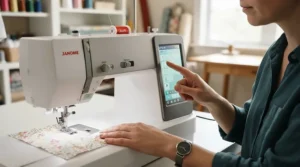
A quilting sewing machine with extension table support solves a problem that only reveals itself mid-project. Without extra surface, the quilt hangs off the left edge of the needle plate, and its weight tugs against your hands. That drag distorts stitch length, nudges seams off line, and tires your shoulders.
An extension table does three jobs. It enlarges the flat work surface so the quilt rests rather than hangs. It lets the fabric glide, which keeps seam allowances consistent. And many tables include an adjustable guide, which works like a built-in ruler for parallel lines.
Among the seven machines, the Brother XR9550, Brother HC1850, Singer Quantum Stylist 9960, and Janome Memory Craft 6700P are all described with extension tables, and the Husqvarna Viking Opal 690Q is frequently bundled with one. If a machine does not include a table, budget for one. A quilting sewing machine with extension table access is not a luxury, because it directly improves stitch quality.
A quick practical tip: set the table flush with the needle plate. Even a slight lip can catch fabric and cause puckers at the edge of a block. After that, a clear table with a little glide is worth the setup time.
Computerized Quilting Machine with Wide Throat: How Much Space Do You Actually Need?
Throat space is the horizontal gap between the needle and the machine’s body. It determines how much quilt you can roll up and feed through. A computerized quilting machine with wide throat design lets you push a rolled quilt through without folding it tight, which reduces fabric stress and drag.
Here is a practical rule of thumb based on the spec comparison. Lap quilts and wall hangings fit comfortably in 6-8 inches. Twin and full quilts are more comfortable with 8-9 inches. Queen and king sizes benefit from 10 inches or more, which is where the Janome Memory Craft 6700P (10 inches) and Janome Horizon Memory Craft 8200QCP (about 11 inches) separate themselves from the pack.
A wide throat is not magic, though. You still need to roll the quilt, support its weight, and move slowly. Think of it like parking a larger car: the extra space helps, but you still need good technique. If your machine is at the narrow end, plan on a larger extension table, a rolled quilt, and extra patience. A computerized quilting machine with wide throat design reduces effort but cannot replace good habits.
One more thing to weigh: a wider throat usually means a heavier machine and a higher price. If your quilting is small-scale, that money may be better spent elsewhere.
Free Motion Quilting on a Computerized Machine: A Practical Starter Guide
Free motion quilting is the moment quilting stops being engineering and starts being drawing. You lower or cover the feed dogs, attach a free-motion foot, and steer the fabric yourself. It is wonderfully creative and a little humbling at first.
A computerized machine helps in three ways: consistent tension, a needle-down setting that stops the needle in the fabric, and speed control that holds a steady pace. Here is a simple 30-day starter plan for free motion quilting.
Week 1: Practice sandwiches. Make several small quilt sandwiches from scrap fabric and batting. Practice stippling and meandering lines until your hands relax.
Week 2: Control speed and movement. The most common beginner mistake is moving the fabric too fast or too slowly relative to the needle. Aim for a steady rhythm.
Week 3: Add simple motifs. Try loops, pebbles, and gentle waves.
Week 4: Quilt a small project. A table runner or baby quilt is the perfect first real attempt.
Common mistakes in the first 30 days: gripping the fabric too tightly, skipping the practice phase, and using too much tension. Clean and oil the machine per the manual after heavy sessions. Machines with automatic drop feed, such as the Brother HC1850, remove one setup step, which makes free motion quilting less intimidating for beginners.
Stitch Regulator: Does It Justify the Price?
A stitch regulator is a sensor system that tracks how fast you move the fabric and adjusts needle speed to keep stitch length consistent. B-Sew Inn’s guide to machines with a stitch regulator compares it to cruise control, and that is a fair analogy: you steer, and the system maintains pace.
Why it matters: in free motion quilting, uneven stitch length is the most common beginner frustration. A stitch regulator smooths that out, so beginners get more consistent results sooner. Systems vary. Bernina offers its own, Janome has an Accurate Stitch Regulator, and Juki has offered a regulator for its TL series. Some machines can be outrun if you move fabric faster than the sensor can respond, so technique still matters.
Based on the spec sheets reviewed, none of the seven machines in this guide is documented with a built-in stitch regulator out of the box. Brand-specific options may exist as add-ons or in specific bundles, so confirm before buying. If a stitch regulator is a must-have, dedicated higher-end models, such as the Bernina 770 QE PLUS, which one retailer highlights for its regulation and 10-inch throat, sit above this price tier.
The honest verdict: a stitch regulator is valuable if you plan to do a lot of free motion quilting. If you mostly piece and do simple straight-line quilting, you can skip it and save the money.
Quarter Inch Piecing Foot: The Small Accessory That Makes or Breaks Your Blocks
A quarter inch piecing foot is a presser foot designed to guide fabric so your seam allowance is exactly one quarter of an inch. Many quilting patterns assume that measurement, and small errors compound. Eight seams that each drift by a hair can leave a block visibly undersized.
Why it matters in practice: a consistent seam allowance means blocks finish at the expected size, points meet, and the quilt top lies flat. Many quilters prefer a “scant” quarter inch, slightly less than a true quarter inch, to account for the thickness of the thread and the fold. A good quarter inch piecing foot often includes a guide edge so you can feed fabric against it without watching the needle.
The Janome Memory Craft 6700P includes a quarter-inch seam foot among its accessories, and the Husqvarna Viking Opal 690Q offers an adjustable quarter-inch foot with guide in many bundles. Budget machines may or may not include one, so check the box contents. If you need to buy one, a quarter inch piecing foot is one of the cheapest upgrades that pays off immediately.
Test before you commit: sew two strips, press, and measure the finished width. If the result is off, adjust your needle position or guide. This simple test saves hours of frustration.
Real-World Scenarios: Which Machine Fits Which Quilter?
Specs are abstract, so here are three realistic profiles matched to machines, with budget, environment, and usage frequency in mind.
The college student on a tight budget. She quilts on weekends in a shared apartment, with limited table space and a budget around $300. The Brother XR9550 is the sensible match. It is light, includes a wide table, and works for lap-size quilts. She can carry it to a campus craft club without strain.
The weekend quilter with a dedicated sewing room. He finishes two or three queen-size quilts a year and wants less shoulder strain. The Janome Horizon Memory Craft 8200QCP and Janome Memory Craft 6700P fit best, because the wide throat and flatbed reduce the effort of moving a large quilt. Here, the price premium buys comfort and consistency.
The sampler maker who loves variety. She mixes decorative stitches, appliqué, and piecing on small to medium projects. The Singer Quantum Stylist 9960 matches her appetite for stitch variety, and the large extension table helps with mid-size projects. If she later gets serious about regulated free motion quilting, she can upgrade.
For quilters who sew daily and want a durable all-rounder, the Juki HZL-F600 and Husqvarna Viking Opal 690Q fill the middle. The first prioritizes sturdiness and bobbin reliability. The second prioritizes automation across fabric thicknesses.
Common Quilting Problems and the Machine Features That Fix Them
Every quilter hits the same walls. Here are four common problems and practical fixes tied to the machines above.
Problem 1: Puckered seams. This often comes from uneven feeding between layers. Machines with layered feeding systems, such as the Janome Memory Craft 6700P with AcuFeed Flex, tackle this directly. A walking foot or dual feed foot is the usual fix on other machines.
Problem 2: Seam allowances drifting. A quarter inch piecing foot with a guide edge keeps the allowance steady. Sew a test strip before every project.
Problem 3: Uneven stitch length in free motion quilting. Practice builds the skill, and a stitch regulator can smooth the gap. Without one, focus on matching hand speed to a steady needle rhythm.
Problem 4: Quilt drag. If the quilt pulls away as you sew, add or enlarge the extension table, and support the weight on a chair or table beside you. A computerized quilting machine with wide throat design also helps.
Most of these issues come down to fabric support and consistent feeding, not exotic features. Fix the basics first, then think about upgrades.
Computerized vs Mechanical Quilting Machines: A Detailed Comparison
Mechanical machines have earned their loyalty. They are simple, repairable, and often cheaper. Yet a computerized machine brings precision tools that matter in quilting. The history of the craft is intertwined with the evolution of the sewing machine, which Wikipedia’s article on the sewing machine traces from the early nineteenth century forward.
| Feature | Computerized | Mechanical | Best For |
|---|---|---|---|
| Stitch selection | Many built-in stitches, LCD | Dial with limited stitches | Computerized for variety |
| Tension | Often automatic | Manual dial | Computerized for consistency |
| Needle up/down, auto threader | Common | Rare | Computerized for convenience |
| Repair simplicity | More complex | Simpler | Mechanical for DIY repair |
| Price | Higher entry price | Lower entry price | Mechanical for tight budgets |
The table shows the trade-off clearly: computerized machines automate the fiddly parts of quilting, while mechanical machines reward patience and simplicity. For piecing hundreds of blocks, needle-down and automatic tension noticeably cut fatigue. If you sew a handful of quilts a year and enjoy tinkering, a mechanical machine can still serve you well. A computerized sewing machine for quilting wins when consistency and speed matter most.
Long-Term Cost & Maintenance of a Computerized Sewing Machine for Quilting
The sticker price is only the first chapter. Total cost of ownership includes needles, thread, bobbins, servicing, and accessories. Here is how to think about it.
Consumables. Quilting needles dull faster than you expect, especially through multiple layers. Budget for fresh needles every project or two. Quality thread reduces lint buildup and tension problems.
Cleaning and oiling. Lint accumulates in the bobbin area and can trigger skipped stitches. Clean after each project, and follow your manual for oiling. Some machines are self-lubricating, so check before you oil.
Servicing. Computerized machines benefit from periodic professional service. Premium models like the Janome Memory Craft 6700P and Husqvarna Viking Opal 690Q are typically sold through dealers who offer service, which can offset the higher price.
Cost per use. Spread across years of quilting, a $300 machine and a $2,500 machine look very different. If you quilt weekly for ten years, a premium machine costs only a few dollars per week. If you quilt twice a year, the budget model wins. The honest answer depends on how often you sew.
Warranty and support matter too. Choose a model backed by accessible customer service, and register your purchase.
FAQ
❓ How much does a computerized sewing machine for quilting cost?
❓ Can I do free motion quilting on a computerized machine?
❓ Do I need a stitch regulator for quilting?
❓ What throat space is best for queen-size quilts?
❓ Is a quarter inch piecing foot included with most machines?
Conclusion
The best computerized sewing machine for quilting is the one that matches how you actually quilt, not the one with the longest spec sheet. If you are new, the Brother XR9550 and Brother HC1850 give you a wide table, drop-feed readiness, and modern conveniences at a friendly price. If you love stitch variety, the Singer Quantum Stylist 9960 is hard to beat. If you piece daily, the Juki HZL-F600 and Husqvarna Viking Opal 690Q offer sturdiness and smart automation. If you finish bed-size quilts at home, the Janome Horizon Memory Craft 8200QCP and Janome Memory Craft 6700P give you the workspace that saves your shoulders.
Whatever you choose, remember the fundamentals: an extension table, enough throat space, a reliable quarter inch piecing foot, and a plan for free motion quilting practice. Consider a stitch regulator if free motion work is your passion. These details matter far more than stitch counts.
Start with your biggest quilt, work backward to the workspace you need, and then compare prices. A good computerized sewing machine for quilting should feel like a quiet partner, not a daily argument.
✨ Ready to Start Quilting with Confidence?
🔍 Check current pricing and availability on your favorite picks above, and give your next quilt the machine it deserves. Your future self, with perfectly matched points, will thank you!
Recommended for You
- Computerized Sewing Machine with Automatic Needle Threader 7 Top 2026
- Metal Frame Mechanical Sewing Machine for Beginners: 7 Best 2026
- Mechanical Sewing Machine for Denim Hemming: 7 Best Picks 2026
Disclaimer: This article contains affiliate links. As an Amazon Associate, I earn from qualifying purchases. If you purchase products through these links, we may earn a small commission at no additional cost to you.
✨ Found this helpful? Share it with your friends! 💬🤗
